A First Planning Session for a Shared Seasonal Project
Plan a shared seasonal project by agreeing what matters, mapping dependencies and choosing a sensible first commitment without trying to settle every detail.
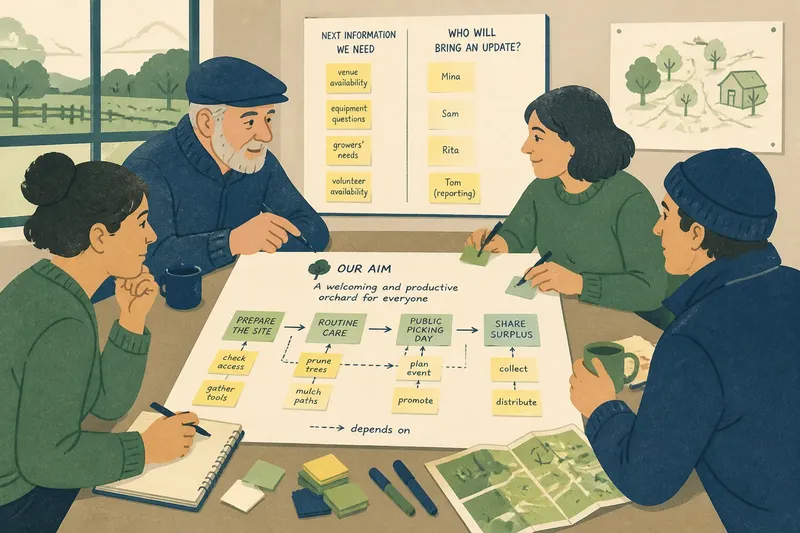
The common mistake in a first planning session for a shared seasonal project is trying to allocate every job before the group has agreed what the work is meant to change. That can leave people with a crowded task list but no shared way to choose what comes first. Start with the outcome and the conditions that shape it; let the detailed work emerge as the group learns more.
A community orchard, a village hall programme and a shared produce stall all follow seasonal rhythms, but none can be planned by calendar alone. Weather, access and people’s availability may alter the sequence. A useful session gives the group a way to make choices when those conditions shift, rather than asking everyone to commit to a fixed timetable too soon.
What should the group decide first?
Agree what a successful season would make visible. “Make the orchard welcoming and productive” may be a useful starting phrase, but members could interpret it differently. Ask what someone would see, use or take part in if the work went well: perhaps a cared-for seating area, a public picking day or an agreed way to handle surplus fruit.
Those signs help the group judge whether proposed work serves a shared purpose. They also give the plan boundaries. If an attractive idea does not contribute to the agreed outcome, note it for another time rather than trying to fit several projects into one season.
Write the aim in ordinary language on a large sheet or wipe-clean board. Read it aloud and ask whether it would help the group choose between two competing tasks. If it would not, adjust the wording until it offers a practical basis for decisions.
How can the group map the work without overplanning?
Work backwards from the moments that will make progress visible. In an orchard, those might include a public day, fruit becoming ready, routine maintenance and preparation of the site. Treat them as landmarks, not a fixed order: the group needs to identify which activities depend on others before deciding when they can happen.
Use a separate note for each stage of progress, such as “prepare the site” or “organise the public day”. A stage is a meaningful part of the project; its tasks are the actions that help complete it. Keeping the two distinct prevents a collection of small jobs from hiding a missing piece of the plan.
Arrange the stage notes in a rough sequence. Draw an arrow only where one stage truly depends on another. For example, an event may need a suitable location and a decision about access before its arrangements can be confirmed. Other work may happen alongside it. A board with a few clear dependencies is often more useful than guessed dates for every activity.
Bring thick pens, sticky notes, a local calendar and any relevant map or site sketch. Invite people with different kinds of knowledge: someone who uses the site, maintains equipment, welcomes visitors or liaises with the parish council may spot a constraint others miss. If a person cannot attend, ask for their view by phone or in writing and include it in the discussion.
What details should wait until the plan has a shape?
Do not assign every small action in the first session. Instead, decide what information the group needs before it can choose the next commitment. A stage may need a contact who keeps its status visible, but that role need not make the contact responsible for all the work.
For each stage, note its next decision or useful piece of information, any dependency, and who will bring an update to the group. Make clear whether that person is expected to do the work, gather options or simply report what has changed. The rest of the group can divide smaller actions later, when the necessary people and conditions are clearer.
Use dates only where they help the group act: a booking deadline, a planned gathering or a period when a task is usually suitable. If weather or access could change the order, record the condition that would prompt a review rather than treating a pencilled-in day as a promise.
Imagine a group planning a shared produce stall. The members agree that the aim is to offer local growers a welcoming place to sell surplus produce. They identify “check the venue and stall arrangements” as an early stage, and ask Mina to bring back the hall’s availability and any equipment questions; a second member asks growers what sort of space they would use. The group then compares the available venue with growers’ needs and decides whether to reserve it or reconsider the format. The observable result is a grounded choice about the next commitment, not a premature promise to run an event.
Where a project involves equipment, land access, food handling or public use, follow the owner’s instructions and applicable local requirements. If a decision needs specialist judgement, the group should seek a suitably qualified person rather than trying to settle technical or safety matters through general discussion.
How should the group handle uncertainty?
Keep unresolved questions beside the stage plan, but focus discussion on what each answer would change. “Ask the hall caretaker about access” is a question; “the hall is available” is a decision only after confirmation. This distinction stops an assumption from quietly becoming part of the plan.
Choose review points that are tied to a choice, not meetings for their own sake. The group might return to the plan after checking access, before committing to an event or when a change in conditions affects the sequence. State what the group expects to know at each point and what decision may follow.
For example, “after checking who can help, decide whether the public day needs a smaller format” gives the next conversation a purpose. If a key volunteer becomes unavailable or a site cannot be used, the group can bring the relevant choice forward rather than waiting for a routine meeting.
What questions do groups ask about a first planning session?
What if the group cannot agree on the aim?
Write down the different outcomes people want and ask which one the group can realistically pursue together. If the aims need separate work, record the difference and decide whether one belongs outside this season’s plan.
How detailed should the first seasonal plan be?
It should show the agreed outcome, the main stages, important dependencies and the next choices the group must make. Leave minor tasks open until the group knows what help and information are available.
How should the plan handle weather-dependent work?
Use a suitable period or a clear condition for review instead of an exact date that may prove unsuitable. That lets the group adapt the sequence while keeping the purpose and next commitment in view.
What if someone cannot attend the session?
Share the draft aim and stage map in a form they can respond to, and make clear which choices remain open. Set a point for comments before the group treats those choices as settled.
How can the group keep the plan usable?
Before the session ends, read back the aim, stage sequence, dependencies and review points. Ask participants to correct anything they understood differently. The purpose is not to restart the discussion; it is to make sure the plan reflects what the group actually agreed.
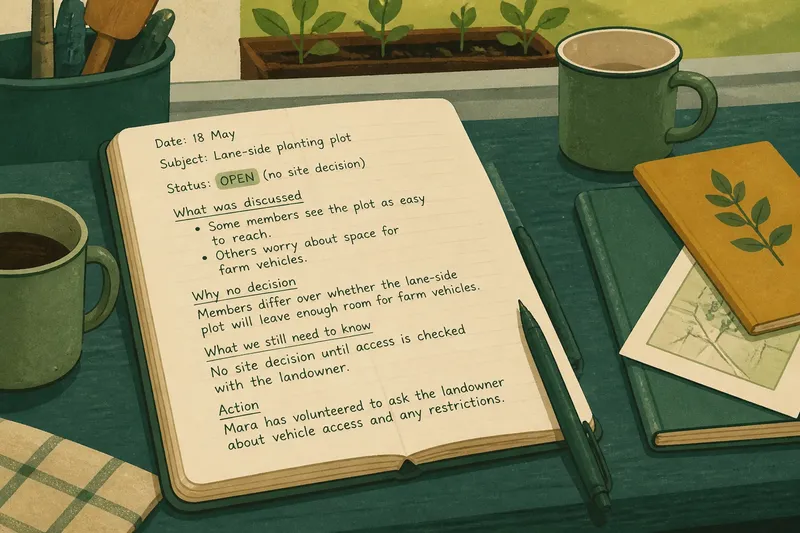
Keep the record somewhere participants can reach, such as a shared folder or a copy in the village hall. A photograph of the board can work too, provided people can read it. Mark confirmed decisions separately from assumptions and unanswered questions, and make the next review point easy to find.
A first planning session for a shared seasonal project is most useful when it leaves room to respond to what the group learns. The aim can stay steady while the sequence changes. When new information arrives, ask which choice it affects, then revise only the part of the plan that needs to move.