The Myth That Every Task Needs a Committee
The myth that every task needs a committee can stall rural projects. Learn how to decide which choices need collective judgement and which can stay local.
The most common mistake in a rural project is sending every small choice back to a committee. That can delay a hall booking or a repair while the actual question—who should have a say in this particular choice?—remains unanswered. A useful distinction is between choices that shape the group’s shared commitments and choices that apply an existing commitment to a specific situation.
What does the decision change?
Start with the effect of the choice, rather than the size of the task. A decision may look minor but still change who can use a shared space, how a local resource is treated, or what the group appears to stand for. Conversely, a task may involve several calls and practical arrangements without changing any of those things.
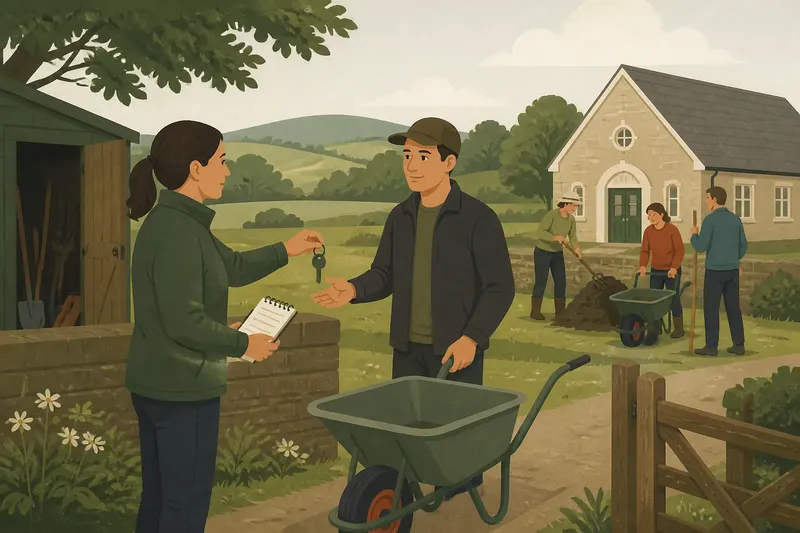
For instance, choosing whether a village hall event will welcome outside stallholders affects the event’s purpose and who can take part. Calling the caretaker to confirm the agreed room layout is usually implementation. The first choice may need collective judgement; the second can often be handled under an existing agreement.
Ask what would be different for people if the group chose one option rather than another. If the answer concerns access, fairness, shared priorities, or a new commitment, the choice deserves a wider conversation. If the answer concerns only how an agreed plan is carried out, a full committee discussion may add little.
Which choices deserve collective judgement?
Bring a choice to the people with authority to make it when it affects shared priorities, changes access for others, commits common resources, or may set a precedent. A parish path project might need to reconsider a route if it changes how walkers or neighbouring landowners are affected. That is different from deciding which day a volunteer will collect already-approved materials.
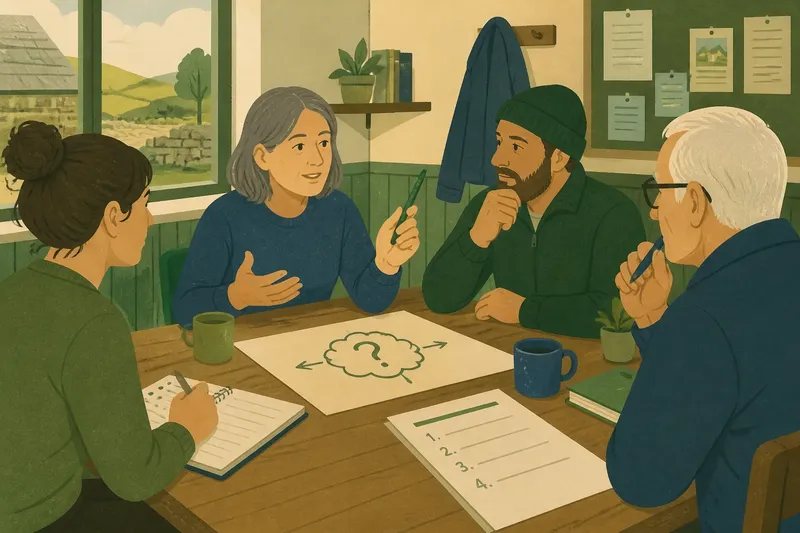
Relevant knowledge matters too. The hall manager may know which rooms are available, a regular user may understand an access concern, and a treasurer may know whether a proposed commitment fits the group’s agreed plan. Consultation should help answer the decision at hand, not become a general invitation to revisit every part of a project.
- Access: Check whether an option changes who can use a place or take part. If it does, consult those affected and take the choice to the group with authority; if not, continue within the agreed arrangement.
- Shared priorities: Check whether the option means doing one activity instead of another. If it does, ask the group to set the priority; if not, let the relevant volunteer carry out the existing plan.
- Common resources: Check whether the choice uses money, equipment, space, or goodwill beyond what has already been agreed. If it does, seek approval before committing; if not, proceed within the authorised scope.
- Precedent: Check whether the answer could shape how similar requests are treated later. If it could, ask the group to agree a consistent principle; if it could not, handle the specific case under current practice.
- Essential knowledge: Check whether someone has information that could alter the choice. If so, ask that person before deciding; if not, avoid widening consultation without a reason.
- Existing authority: Check the group’s rules or previous decisions for a clear boundary. If the choice falls outside it, return to the authorised decision-makers; if it falls within it, follow the agreed boundary.
How can a rural group choose a fair process?
Match the conversation to the consequences. A short discussion with directly affected people may clarify a practical concern. A choice about the group’s priorities belongs with the people who hold that responsibility, following the group’s rules. A routine application of an agreed plan does not need to be turned into a new collective debate.
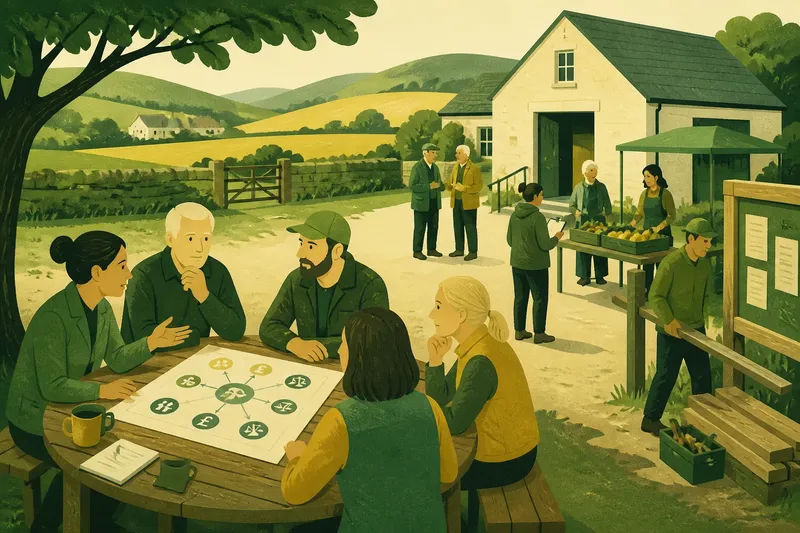
Consider a shared produce stall where space is limited. The group might agree that local growers can apply, but still need to decide how to allocate the space fairly. That principle is a shared choice because it shapes who benefits. Once the group has settled it, arranging the tables can follow the principle rather than reopening the allocation question each time.
Make room for people who may not speak readily in a meeting. Share the specific choice in plain language, explain what is already settled, and offer a way to raise a concern before the group decides. This helps distinguish a genuine change in the decision from a preference about routine arrangements.
What if the situation falls outside the agreed boundary?
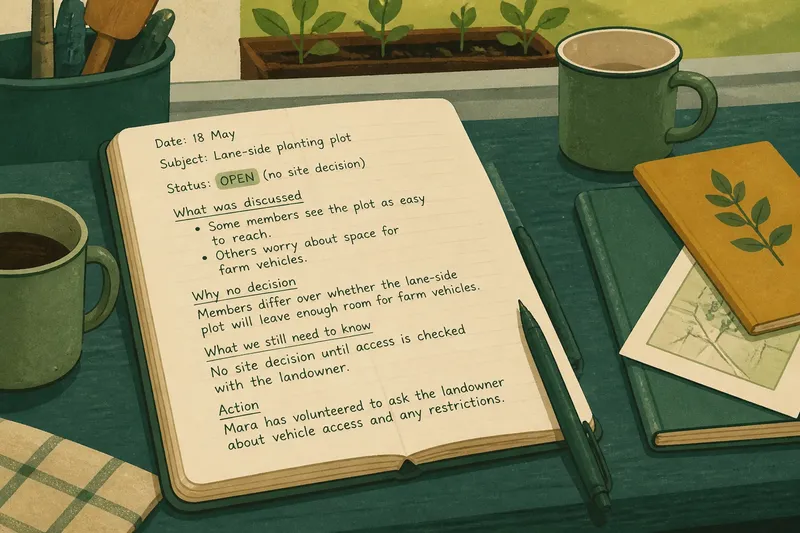
A new circumstance can turn implementation into a fresh choice. If a supplier cannot provide the agreed material, or a planned venue becomes unavailable, pause any action that would commit the group to a substantially different plan. Bring back the alternatives and the practical differences, then ask only for the decision needed to proceed.
Say a village gardening group has agreed to repair a noticeboard using a particular type of timber, and the volunteer arranging materials learns that it is unavailable. The volunteer checks whether another supplier can provide the agreed timber, then asks about a substitute. If the substitute changes the appearance or upkeep expected by the group, the volunteer returns with those options; if it is equivalent under the group’s existing decision, the volunteer can proceed within that boundary. These are invented circumstances, not a report of an actual project.
For choices involving safety, legal duties, specialist work, or a landowner’s conditions, check the relevant rules and seek qualified advice where needed. A group’s decision-making process does not replace professional guidance or required permission.
Which questions help settle the boundary?
Can one volunteer make a decision for a rural group?
Yes, when the group’s rules or a previous decision gives that person authority over the choice. If the choice changes shared commitments or goes beyond that authority, it belongs with the appropriate decision-makers.
Does every committee member need to be consulted?
No. Identify who has authority, who is affected, and whose knowledge could change the decision. Follow any rules that specify who must approve particular matters.
What if nobody agrees on who should decide?
Check the group’s constitution, delegated authority, or relevant previous decision. If those do not settle the question, the group should agree who has authority before committing to the disputed option.
How can quieter members have a say?
Send the specific choice and options in plain language, and offer a way to respond before the decision is made. If their concerns could change who is affected or what the options mean, include those concerns in the group’s deliberation.
How can a group keep future decisions distinct?
When the same kind of question recurs, the group can decide a principle for that class of choices. For example, it might agree that an event organiser can select from venues already judged suitable, while changes to the event’s purpose remain for the wider group. The useful result is not less participation for its own sake, but fewer repeated debates about matters the group has already settled.
For a rural group deciding whether a task needs a committee, focus on what the choice changes and who has authority over that change. When the boundary is clear, people can give proper attention to consequential decisions without treating every practical arrangement as a new one.