A Written Agenda or a Shared Question First?
A written agenda or a shared question first? Choose the right meeting opening to give local groups enough structure without closing down useful discussion.

The common mistake is treating a written agenda as proof that a local meeting is organised. If the group has not agreed what it needs to work out, a tidy list can lead everyone through the wrong conversation and leave the real issue untouched. Choosing a written agenda or a shared question first means matching the opening to the kind of thinking people have come to do.
What is the difference between a written agenda and a shared question?
A written agenda names the topics and usually gives them an order; a shared question puts one issue into words for the group to examine together. They are not opposing meeting styles. A question can sit at the centre of an agenda, and an agenda item can be framed as a question. The practical difference is what participants are asked to follow when the discussion begins: a route through several matters, or a clear focus for exploring one.
For instance, “Hall repairs” is a topic, while “Which repairs should we ask the landlord to address first?” is a question. A written agenda might include that decision alongside the bookings rota and the summer gathering. Starting with the shared question instead would let the group spend the opening part of the meeting understanding the repair issue before moving on.
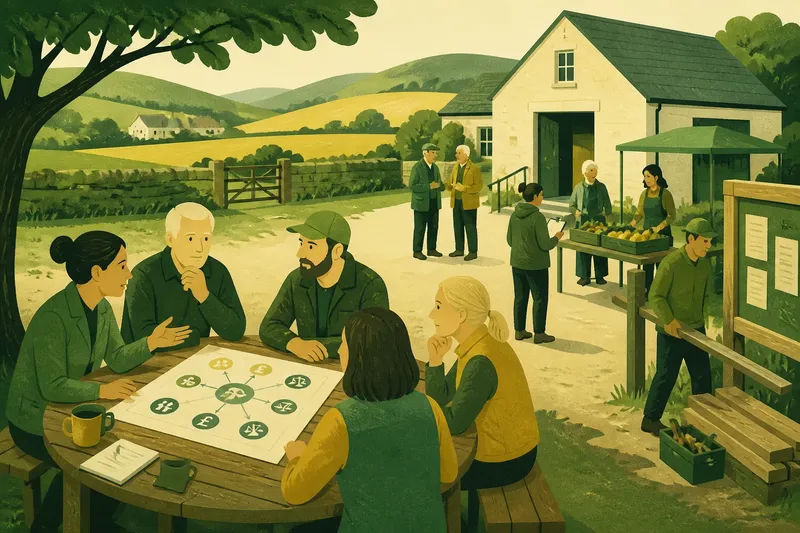
This distinction matters in a village association, a market-garden group or a volunteer team because people often arrive with different bits of local knowledge. One person may know the hall’s booking constraints; another may have heard residents’ concerns; someone else may be responsible for contacting the council. The format should help bring those contributions together rather than make people guess which kind of input is wanted.
When should a group begin with a written agenda?
Begin with a written agenda when participants need to cover several known items, keep commitments visible or make room for people who cannot stay for the whole meeting. A printed sheet or a message sent ahead allows someone to prepare a question, check a date or pass on a view before they arrive. It also helps the chair keep routine business from swallowing the time set aside for a decision.
A useful agenda need not be elaborate. Name each item plainly, mark which ones require a decision, and note who will introduce them. If the meeting concerns a parish fête, for example, “stall bookings” is more helpful than “updates”: it tells volunteers what the subject is without pretending that a choice has already been made.
Give the agenda enough shape to guide the room, but do not make it so detailed that it dictates every contribution. A list of subpoints can be useful when people need to bring specific information. It can also discourage a newcomer from raising a relevant concern if the document looks closed to anything not printed on it. The chair can say that the order is provisional and invite additions before the group settles in.
Sending an agenda in advance is especially useful when people need time to read a map, check a shared calendar or speak to neighbours who are not at the meeting. If access to email is uneven, use the group’s usual channels as well: a noticeboard, a paper copy at the community shop or a message passed through a regular volunteer. The point is not to create more paperwork; it is to make the meeting’s purpose available to those expected to take part.
When is a shared question a better opening?
Start with a shared question when the group does not yet know what answer is workable, or when several concerns have become tangled together. A question gives participants a common place to begin without requiring the chair to settle the solution in advance. It is particularly useful when the meeting’s purpose is to understand a changing situation, surface local knowledge or define what decision is actually needed.
“How can we make the footpath easier to use after heavy rain?” invites people to describe different parts of the problem. “Who will clear the footpath next week?” is a narrower question, appropriate only if the group has already agreed that clearing is the task. A broad opening can reveal missing information; a narrow one can help the group act. The chair needs to know which kind of conversation is intended.
Imagine a rural hall committee has heard that evening classes are difficult for some residents to reach, but has not established whether the main obstacle is timing, transport or awareness. The chair could open with, “What makes it hardest for local people to attend an evening session?” and ask members to share what they know before proposing fixes. The expected observable result is a clearer account of the barriers for the group to consider, not an instant agreement on a particular service.
A shared question is not an invitation to discuss everything connected to the subject. Keep it to one issue, and say what the group should be able to do by the end: understand the problem, choose between options or agree what information to seek. Without that boundary, a wide question can turn into a round of unrelated updates. If a new issue emerges, capture it for later rather than forcing it into the same discussion.
How can a group choose the right opening?
Choose according to what participants need from the meeting, not according to a fixed preference for formal or informal gatherings. Ask whether there are several known items to cover, whether people need preparation, and whether the central issue is ready for a decision. If the answer is yes to the first two, an agenda is likely to help. If the group is still clarifying the problem, lead with a question and keep the rest of the meeting outline light.
A simple distinction can prevent confusion: an agenda organises the meeting, while a shared question organises attention. One can do both jobs in the same document. For example, a short agenda might list the question for discussion first, then routine notices, followed by the decision or next action the group expects to settle. This gives participants a clear focus without hiding the rest of the meeting from them.
Say a residents’ group is considering whether to organise a shared lift arrangement for a local event. If members already have several prepared items, such as checking interest, discussing safeguarding arrangements and deciding who will contact the venue, a written agenda can keep those topics in view. If the group has not established what transport difficulty people face, begin with a question such as, “What would make attending the event easier for residents without a car?” The expected result is a more grounded discussion before anyone treats one proposed arrangement as settled.
For a mixed group, a short written agenda with a prominent opening question often works well. Send the question ahead where possible, then give people time to think before the chair invites contributions. People who are less comfortable speaking quickly may prefer to write a thought on paper or share it with the chair beforehand. That small choice can widen participation without making anyone speak in a prescribed order.
How should the chair handle an agenda item that is still open?
Make the item’s purpose explicit: is the group sharing information, exploring an issue or making a decision? These are different tasks, even if they concern the same subject. “Discuss the water point” gives little direction; “What information do we need before deciding where to place the water point?” tells members that the meeting is not yet choosing a location.
If an item begins to stray, the chair can restate the question and ask whether a point helps answer it. This is not a way to silence disagreement. It helps participants see whether they are offering evidence, raising a concern or moving on to a separate matter. Where the group has reached a decision, record it and make clear what follow-up is needed, so the conversation does not quietly reopen while people are trying to move on.
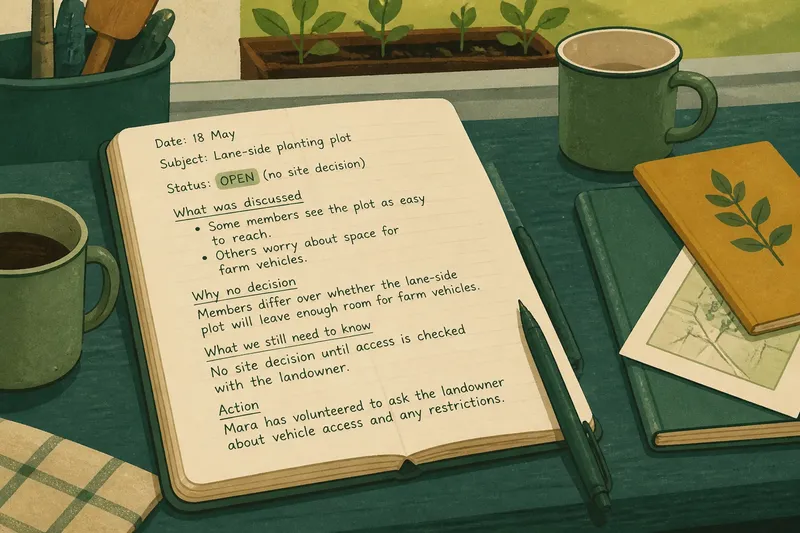
When the group lacks information, resist turning uncertainty into a premature choice. Agree what needs checking, who can reasonably obtain it and when the question will return. If a decision has wider implications for residents, land access or local services, the group may need to consult the relevant people or seek qualified advice before committing. The chair can distinguish that further work from a decision the meeting is able to make on the day.
What questions do people ask about meeting openings?
Can a meeting have both an agenda and a shared question?
Yes. Put the main question beside the relevant agenda item, then list the other business the group needs to cover. Participants can see the meeting’s focus while retaining a clear route through routine matters.
Should the chair send the question before the meeting?
Send it in advance if people may need to check information or think through a sensitive issue. For a straightforward discussion, the chair can introduce it at the meeting, provided everyone has enough context to understand what is being asked.
What if the group cannot answer the question in one meeting?
Agree whether the next useful outcome is more information, consultation or a smaller set of options. Name the follow-up and decide when the question should return, rather than treating an unresolved discussion as a failed meeting.
Is a shared question suitable for a formal meeting?
Yes, if the question is clear and the chair explains whether the group is exploring or deciding. A formal setting can still make space for inquiry; its procedures simply need to be followed when the group reaches a decision.
What should the group carry into its next meeting?
Keep the opening proportionate to the work ahead. Use a written agenda when the group needs a dependable route through known business; begin with a shared question when the issue itself still needs to be understood. For many rural meetings, a short agenda with one carefully framed question offers both structure and room to think.
Before the meeting closes, check that everyone can tell what was decided, what remains open and what information is still needed. That final distinction helps the next agenda or question start in the right place. The choice between a written agenda or a shared question first is most useful when it reflects the group’s actual uncertainty, not simply its preferred meeting habit.